

Black History Month has always been a moment to honor the brilliance, resilience, and creativity of my people. This year, as we celebrate 100 years of legacy, I find myself reflecting even more deeply on the stories that made us, the voices that carried us, and the narratives that continue to lift us forward.
For the past 20 years, my work has been rooted in a single calling: to amplify the voices of Black communities through media and storytelling. From raising awareness about the lived experiences of Black youth to celebrating the achievements of dynamic leaders, public figures, and emerging change-makers, I have had the privilege of chronicling moments that inform, inspire, and illuminate the fullness of who we are.
It has been one of the greatest honors of my life to share our stories — stories layered with triumph, complexity, faith, innovation, and joy. And throughout this journey, my work has also contributed to telling, preserving, and uplifting the powerful histories of our HBCUs — stories that deserve to be told with dignity, context, and pride.
A profound part of that storytelling is the legacy of Historically Black Colleges and Universities — institutions built by sacrifice, vision, and a commitment to our collective future.
At Virginia Union University, our story begins with Mary Lumpkin, a former slave whose courage altered history. The University emerged from the grounds of the former Lumpkin’s Jail, a slave jail once known as “The Devil’s Half Acre.” Through Mary Lumpkin’s resistance, faith, and protection of enslaved people seeking education, that space of trauma became a birthplace of liberation. From a slave jail rose a university — one that continues to produce Black scholar-practitioners, pastors, thinkers, and leaders who impact the world today.
At Bethune-Cookman University, the legacy continues with Mary McLeod Bethune, a woman who, without wealth or status, opened the doors of education to African American girls. She later became the first Black woman to found a college, shaping generations of educators, activists, and visionaries. Her story reminds us that when Black women lead, entire communities rise.
At Florida A&M University (FAMU), the foundation was laid by Thomas Van Renssalaer Gibbs, a Duval County educator and legislator. In 1884, he orchestrated the passage of House Bill 133, which created a school for African Americans. Although initially planned for Jacksonville, the state relocated it to Tallahassee where it evolved into what we now honor as FAMU, one of the most respected institutions in the nation. Gibbs’ legislative courage changed the future of Black education forever.
These histories are not just stories; they are blueprints of resistance, faith, and transformation. And today, that legacy continues.
When Hallmark first launched this Mahogany Writing Community, it created a space specifically designed to inspire, uplift, and celebrate Black women and their voices. To be part of this moment has felt divine, and I’ve been reminded that our narratives really do matter — not only our narratives of the past, but those of the present and future. With our words, we are shaping our art, our leadership, and our love.
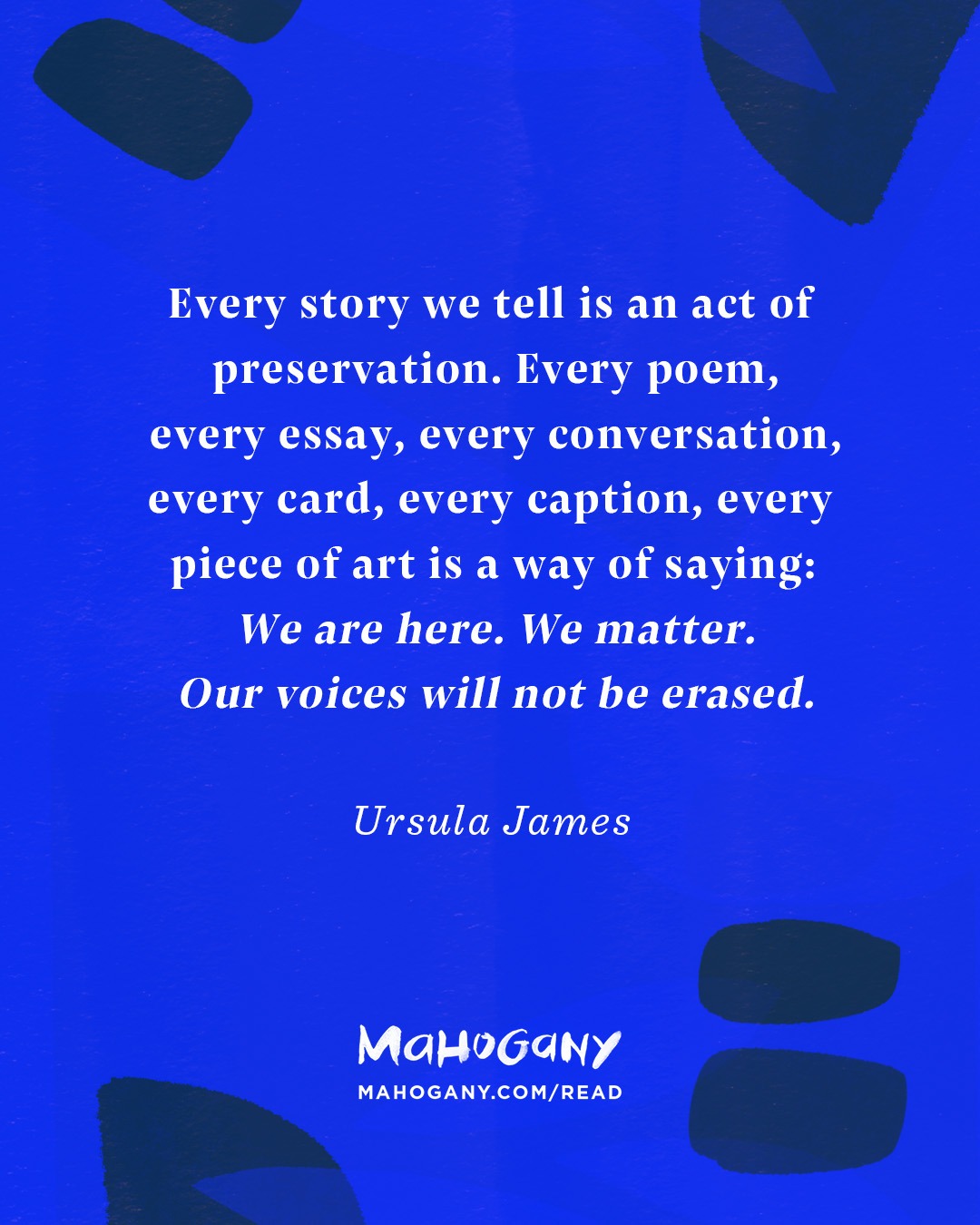
Black History celebrates our wholeness. It reflects the emotional lives of our people. And, as I stand in this season of reflection and renewal, I am reminded that every story we tell is an act of preservation. Every poem, every essay, every conversation, every card, every caption, every piece of art is a way of saying: We were here. We matter. Our voices will not be erased.
This Black History Month, I celebrate not just where we have been, but where we are going. The next 100 years of innovation, storytelling, leadership, and Black excellence. And I celebrate the writers, seasoned and emerging, who will shape that future through truth-telling, vulnerability, and creativity.
Our stories are our legacy. And I am honored to continue telling them.
Leave a Comment

Reader Interactions
No Comments
We'd love to hear your thoughts. Be the first to leave a comment.